Begin with response
Choosing a gemstone is often presented as a lesson in rarity. Rarity has its place, but it is not a substitute for recognition: that immediate moment when a particular colour or quality of light feels unmistakably yours.
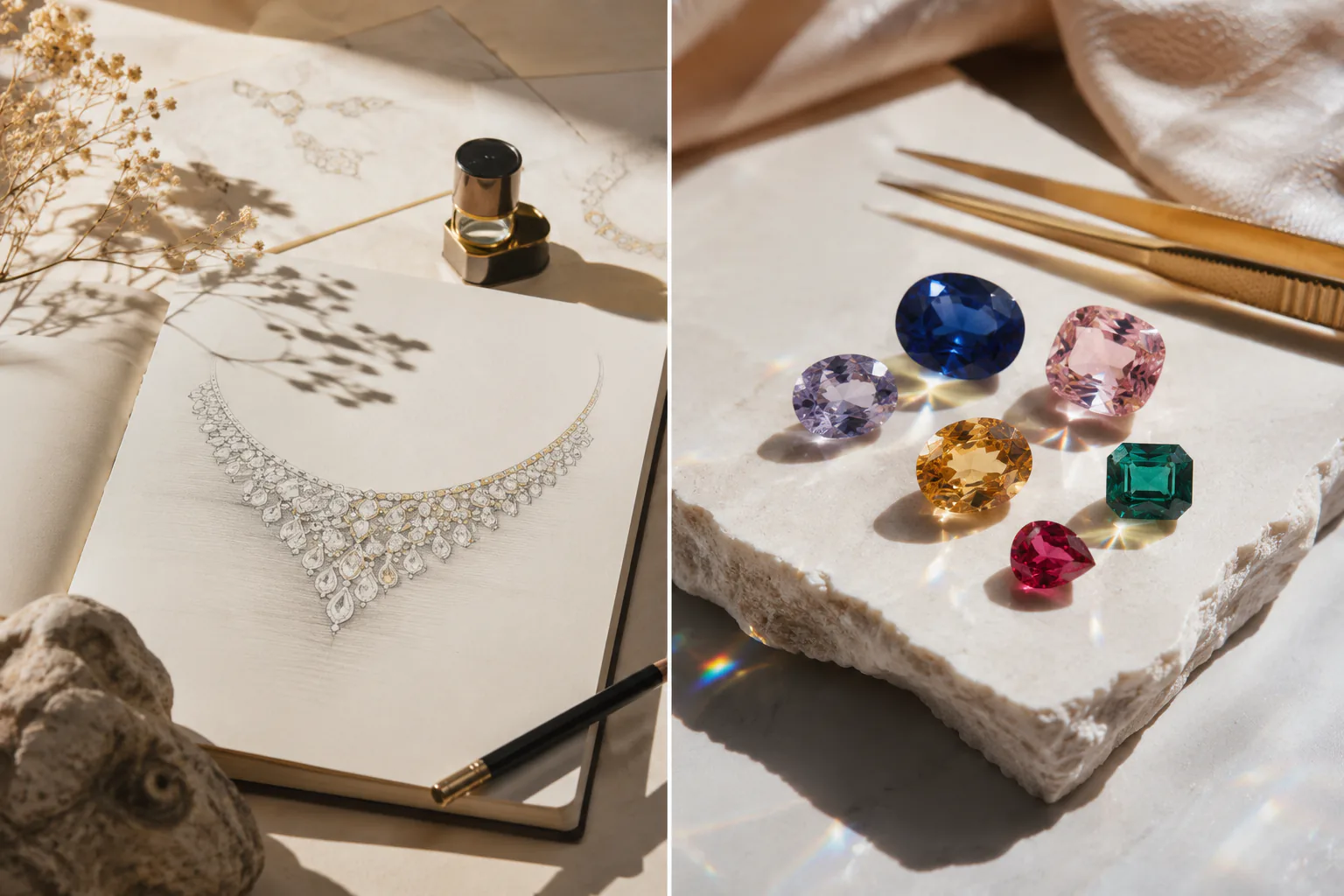
Look at several stones without hurrying to rank them. Notice which one draws you back. View it near a window, in softer interior light, and against the skin. A gem that remains engaging across these changes is offering more than a first impression.
Read colour with patience
Colour has three useful dimensions: hue, tone, and saturation. In plain terms, consider what the colour is, how light or dark it appears, and how strongly it is expressed.
There is no universally ideal combination. A pale sapphire may possess an airy subtlety that suits a delicate pendant; a richly toned ruby may need the scale of a ring to reveal its depth. Evenness can be desirable, but small shifts in colour may also give a stone personality.
Consider the jewel's daily life
A gemstone does not live in a display case. It meets sleeves, tabletops, perfume, travel, and the small collisions of a day. The intended piece should guide the selection.
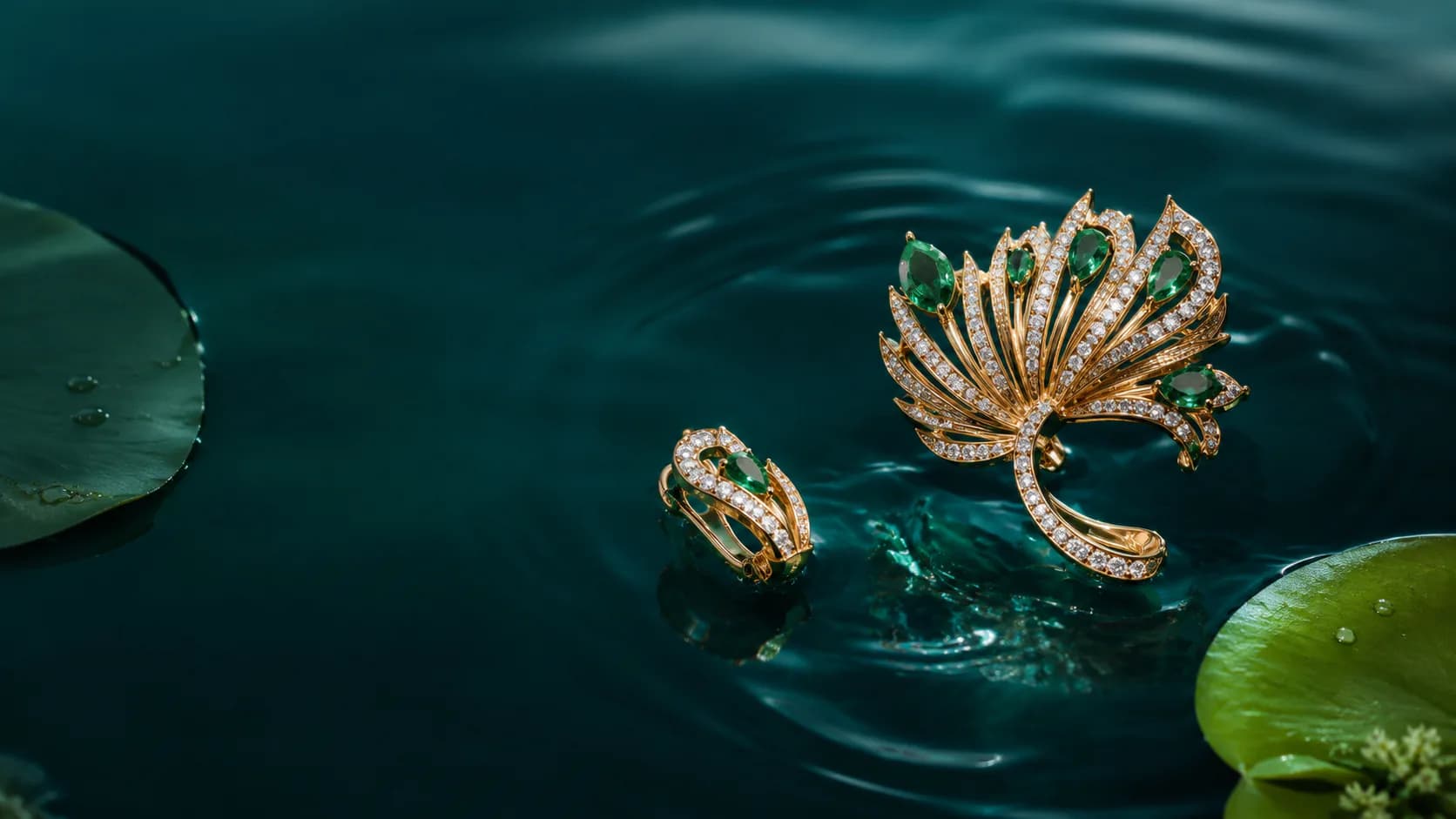
Diamonds, sapphires, and rubies are often suited to frequently worn rings, provided their settings are thoughtfully made. Emeralds and other gems with particular care needs may be better protected by a bezel, halo, or raised surround. Earrings and necklaces generally experience less impact, allowing a wider range of stones and cuts.
Look at the whole stone
Cut is not simply shape. It governs how light travels through a gem, how colour is distributed, and whether the outline feels balanced. Inclusions are also part of the picture. Some are barely visible; others create a distinctive inner world.
Ask to understand what you are seeing, including any disclosed treatments and the care they require. Clear information should deepen appreciation rather than turn the choice into a checklist.
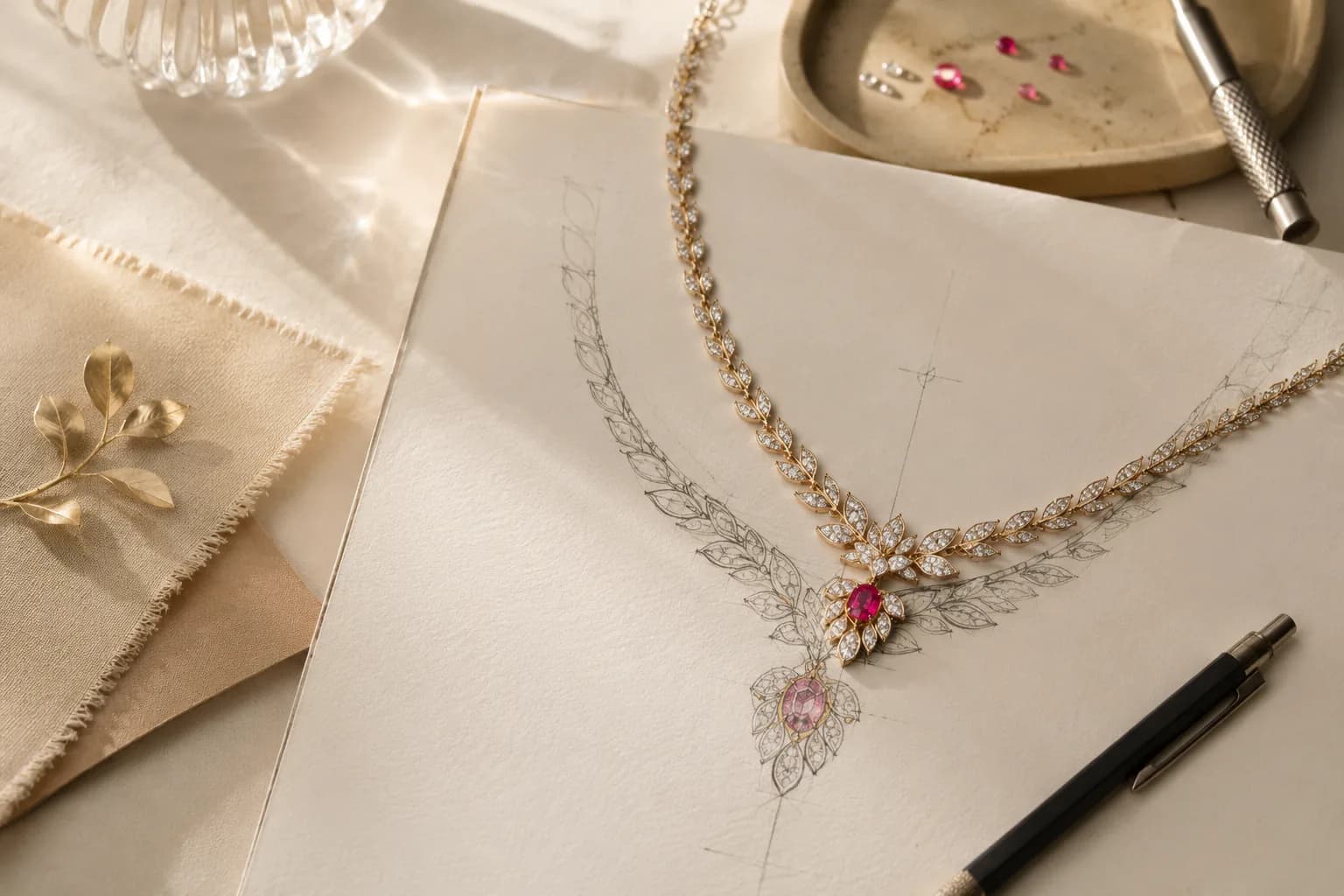
Choose stone and setting together
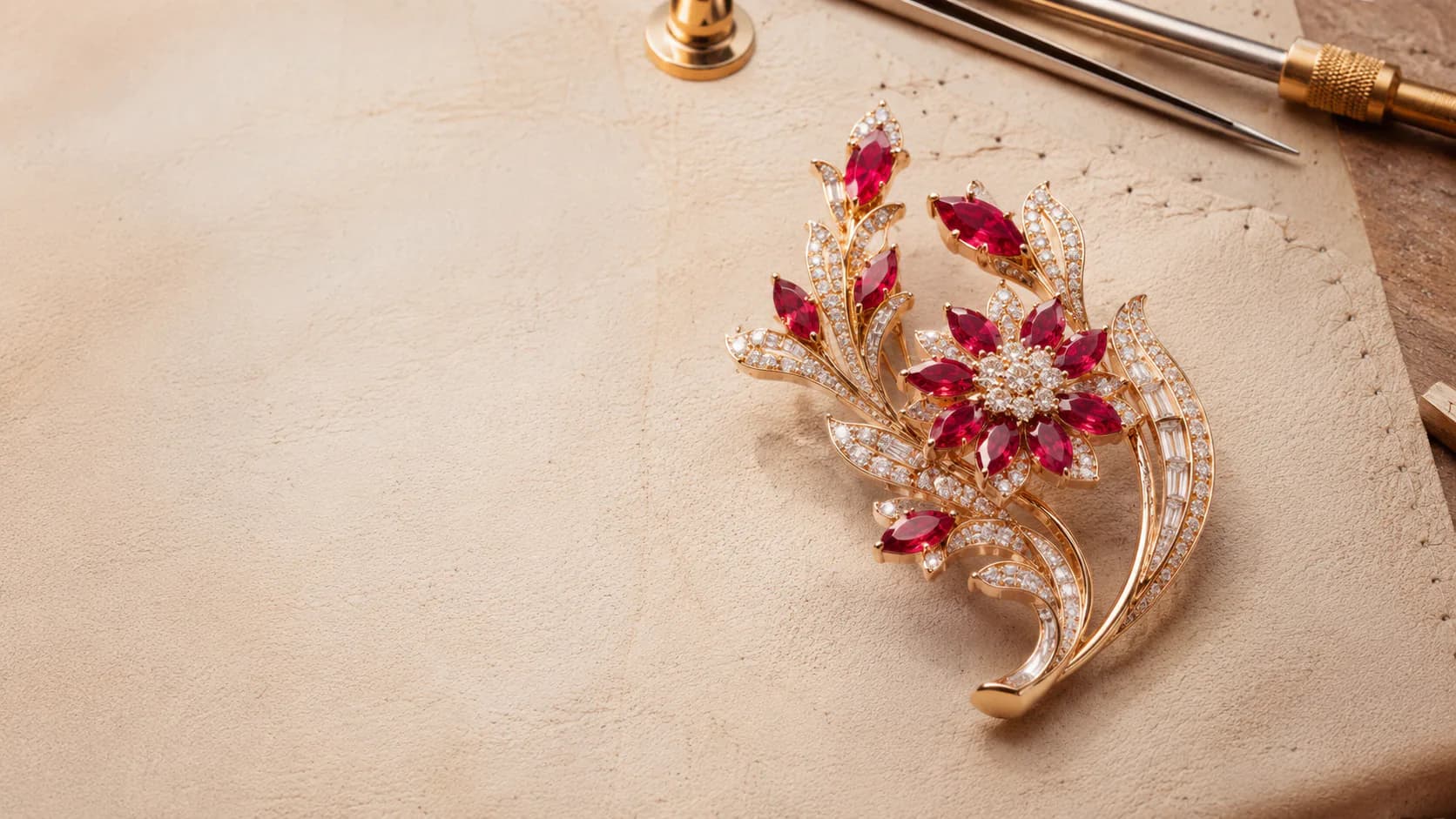
Metal can change the perceived temperature of a gem. Yellow gold brings warmth, while white metal may emphasise coolness and contrast. Rose gold can be beautiful beside certain pink, violet, and green tones, though the pairing should always be judged with the actual stone.
The right choice feels coherent from every angle. It respects the gem's practical needs, supports the way you intend to wear it, and leaves room for a private attachment to grow.