The stone speaks first
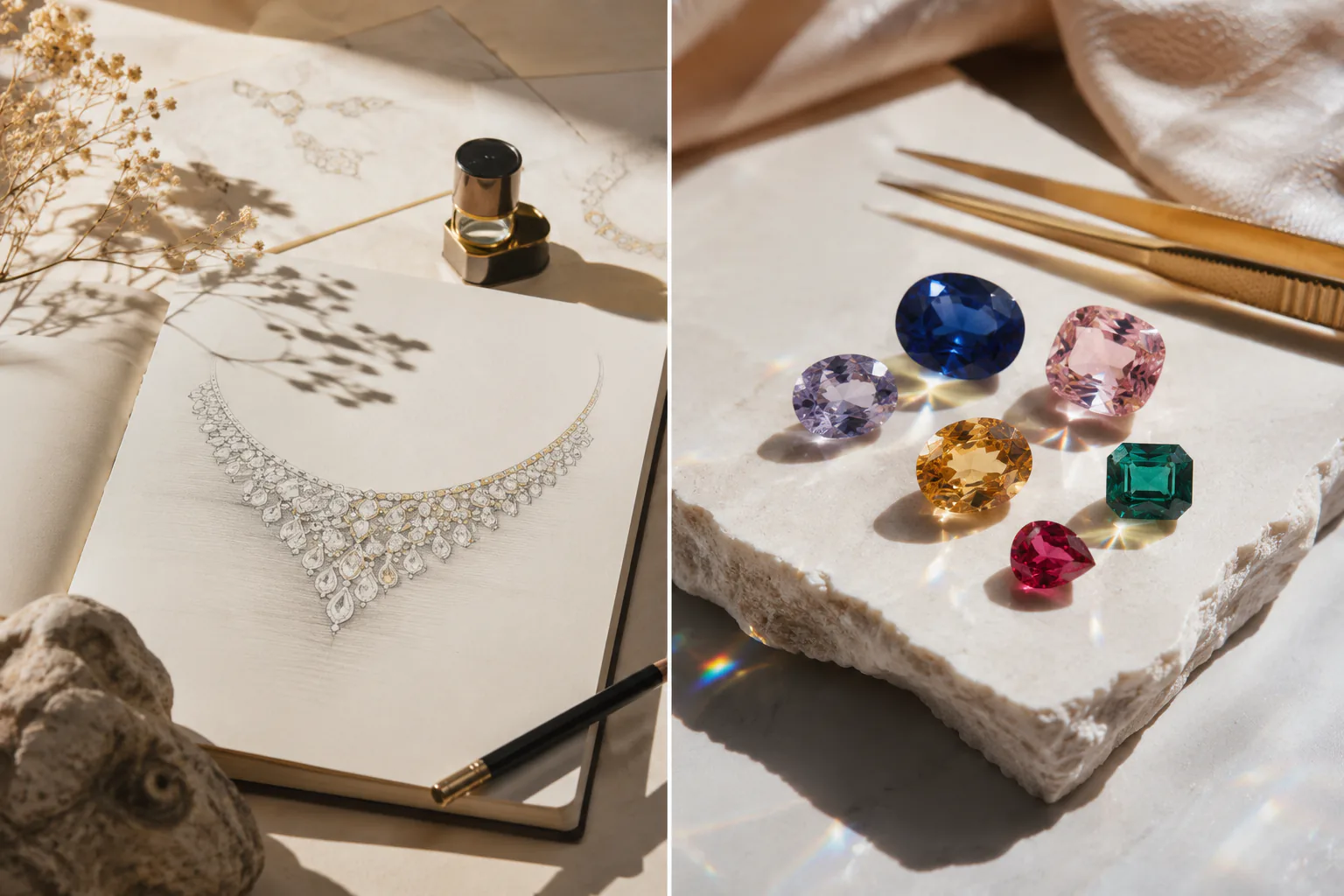
A jewellery drawing may look like the beginning, but the conversation starts earlier. It begins when a loose stone is turned slowly beneath a window and its character comes into view: a flash held at one edge, a pool of colour at the centre, a proportion that feels poised rather than merely symmetrical.
The designer watches before drawing. An elongated gem may ask for a line that continues its movement. A broad, saturated stone often needs more air around it. There is no useful formula here. Two stones of the same variety and cut can lead to entirely different ideas.
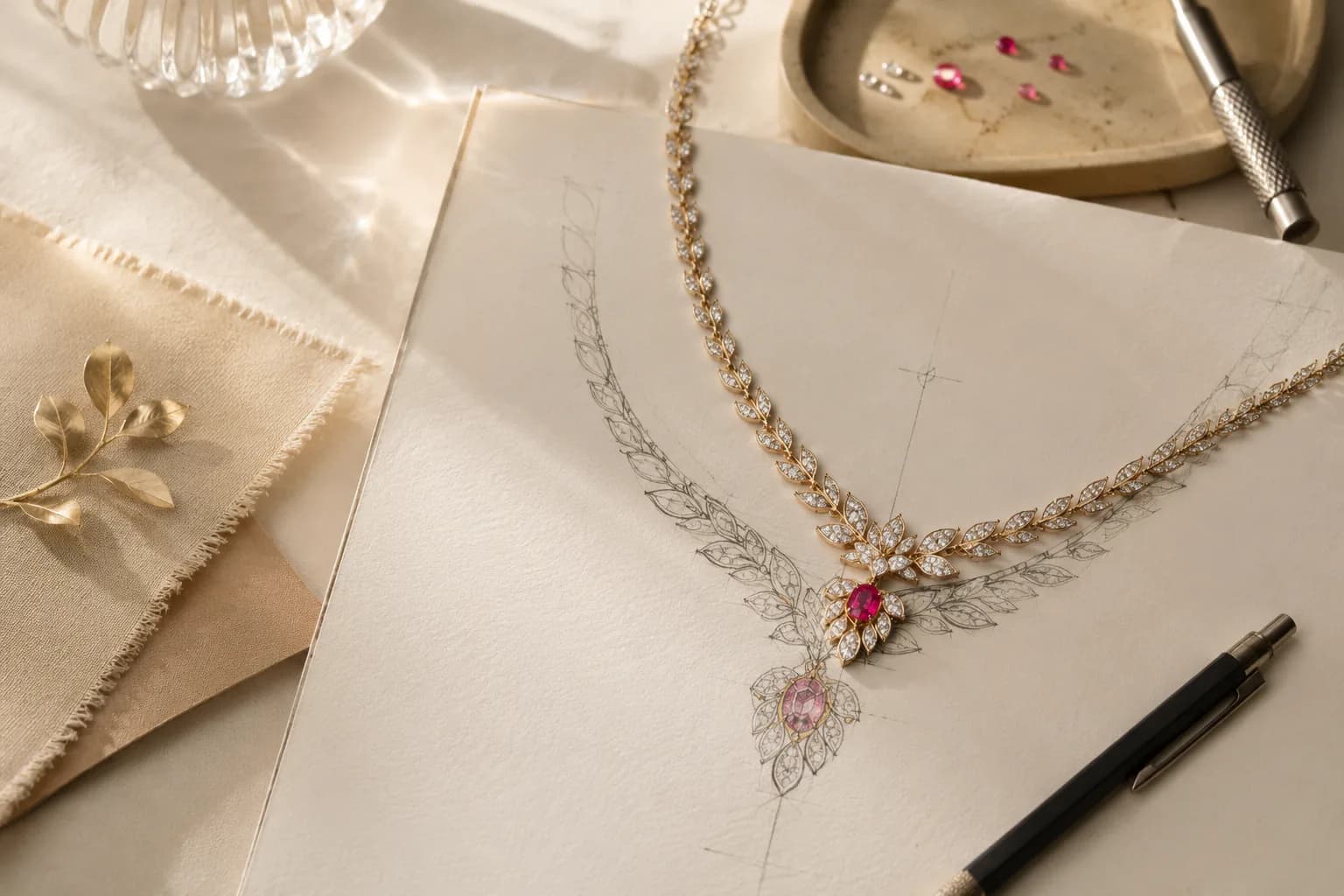
Drawing around light
The first lines are exploratory. They test the distance between stone and skin, the rhythm of an earring in motion, or the point at which a necklace settles against the collarbone.
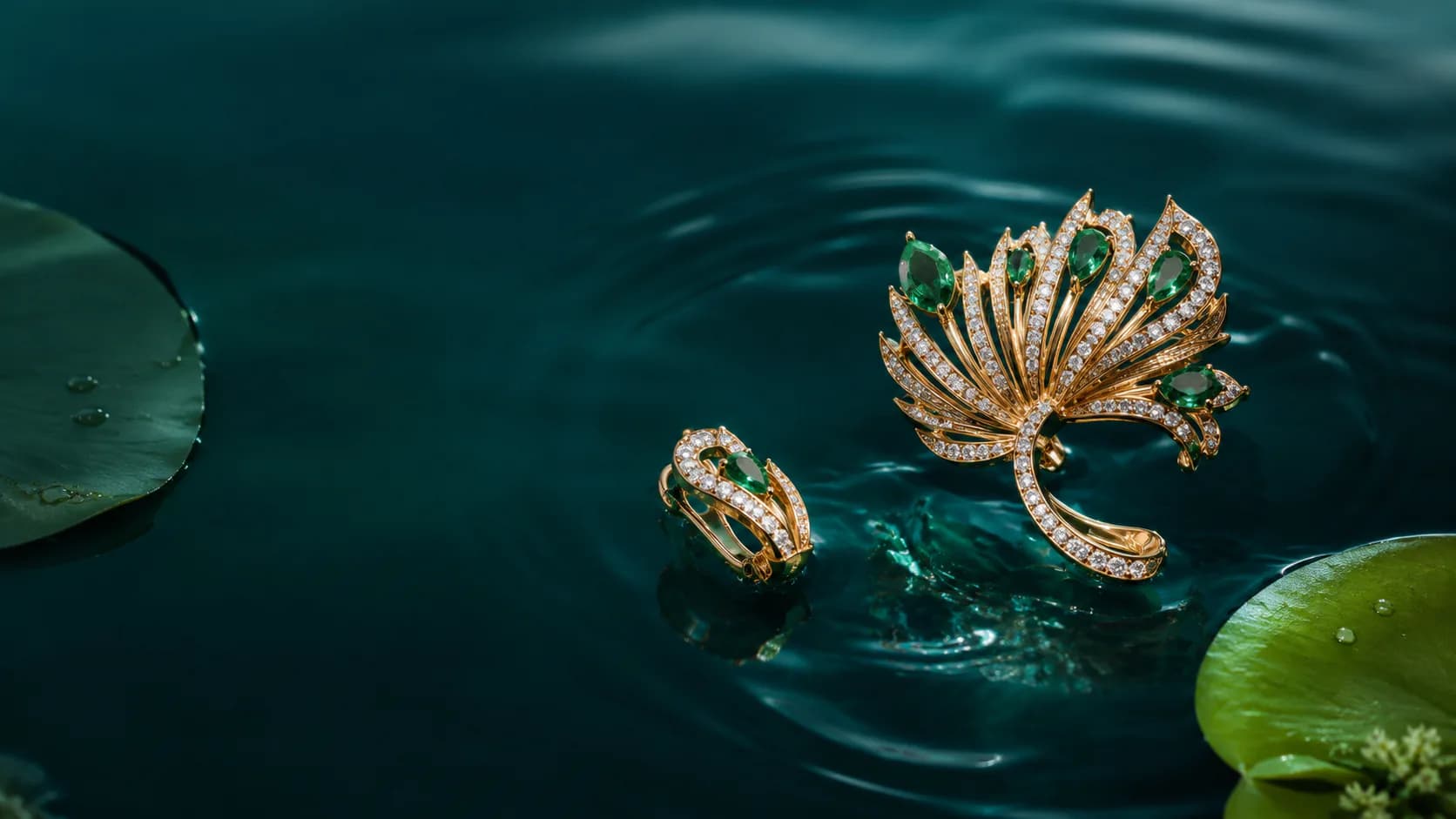
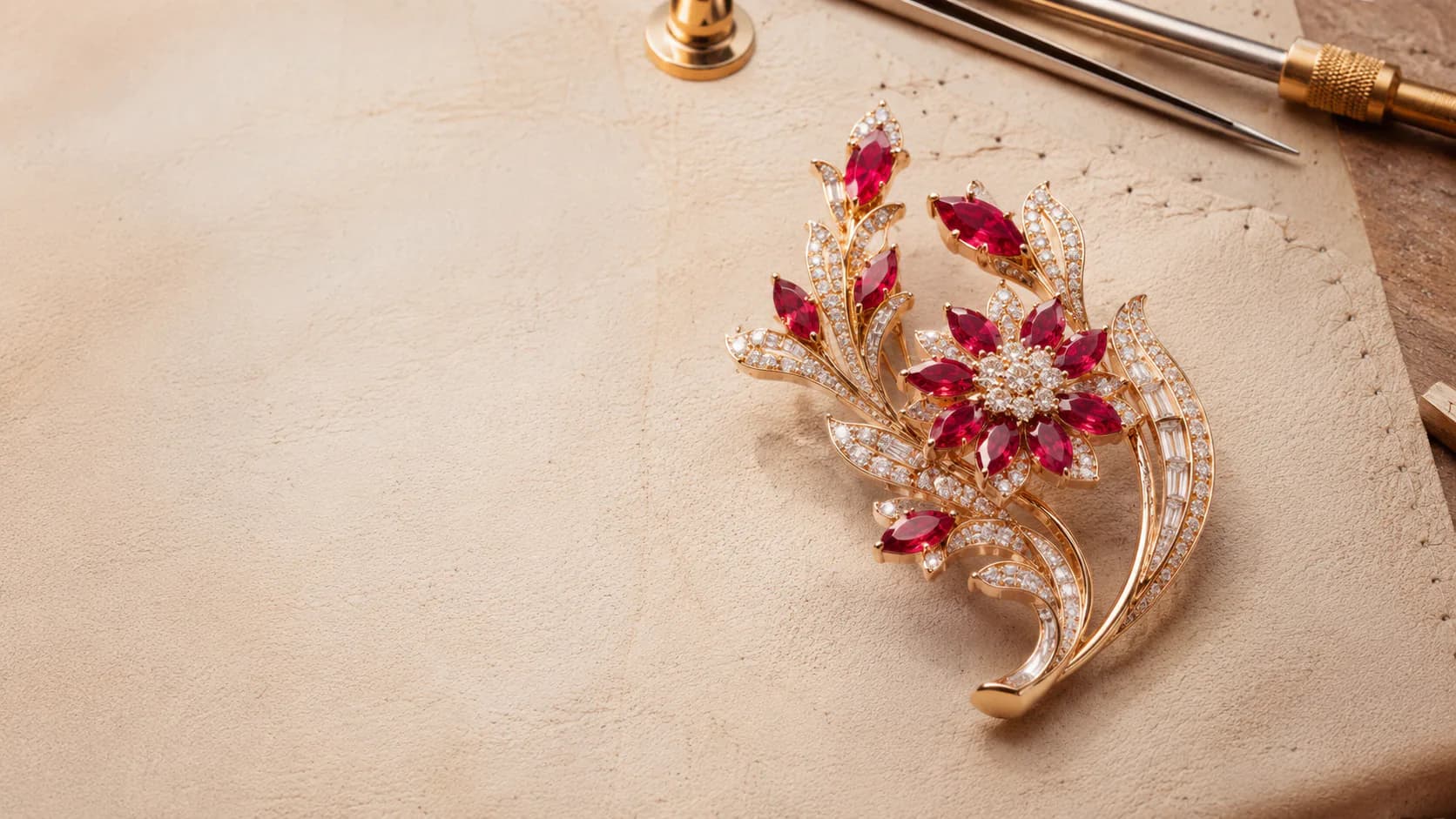
Light is considered as a material in its own right. An open setting can invite brightness through the sides of a gem; a polished rim may return a warmer reflection. Diamonds placed nearby are not simply decoration. Used with restraint, they can sharpen a colour or create a pause before the eye returns to the centre stone.
Structure made discreet
The most graceful jewel often conceals its most difficult decisions. Metal must protect the gem, allow it to be cleaned, and remain comfortable against the body. Clasps, joints, and galleries are resolved with the same attention as the visible face.
This engineering should never feel heavy. A prong follows a facet. A hinge disappears into a repeated motif. The wearer sees continuity, while beneath it sits an exact architecture designed for years of movement.
The final line belongs to the wearer
On paper, a jewel is still. On the body, it acquires pace and gesture. Earrings catch light when a head turns; a ring is seen from many angles during an ordinary day. The fitting is therefore part of the design, not a final courtesy.
A successful piece does not overpower its stone or its wearer. It creates a quiet alignment between them. The gemstone keeps its individuality, the design gives that individuality direction, and light completes what the pencil began.